
Calorie Tracker That Celebrates Imperfect Tracking Efforts
Snacko is the food tracking app that makes healthy eating effortless. Join thousands building better eating habits every day.

Remember when I tried tracking every single almond I ate? Yeah, that lasted about three days before I gave up entirely and deleted the app in frustration. I've watched countless friends do the same dance—start with obsessive logging, then quit when they miss a meal or can't figure out how many calories were in their mom's homemade lasagna. Turns out, the problem isn't our willpower. It's that most calorie trackers treat imperfection like failure, when really, messy tracking is just... human.
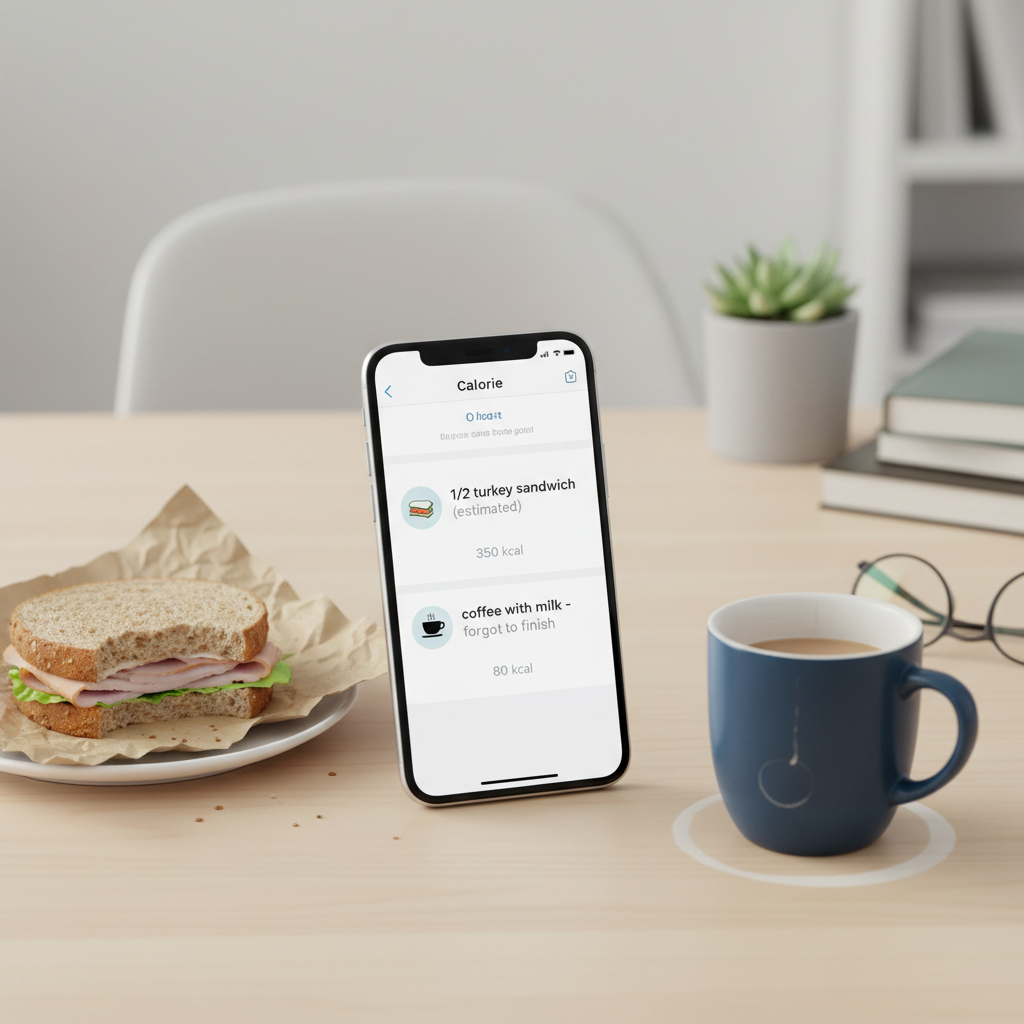
Why I Started Logging Half-Eaten Sandwiches and Forgotten Coffee
I used to abandon my food diary the moment I ate three cookies instead of tracking them. Then I realized I was throwing away weeks of useful data because Tuesday wasn't perfect.
Imperfect tracking means logging what you actually ate, even when it's messy - the sandwich you only finished half of, the coffee that went cold, the handful of crackers you grabbed while cooking. These real moments matter more than pristine entries that don't reflect how you actually eat.
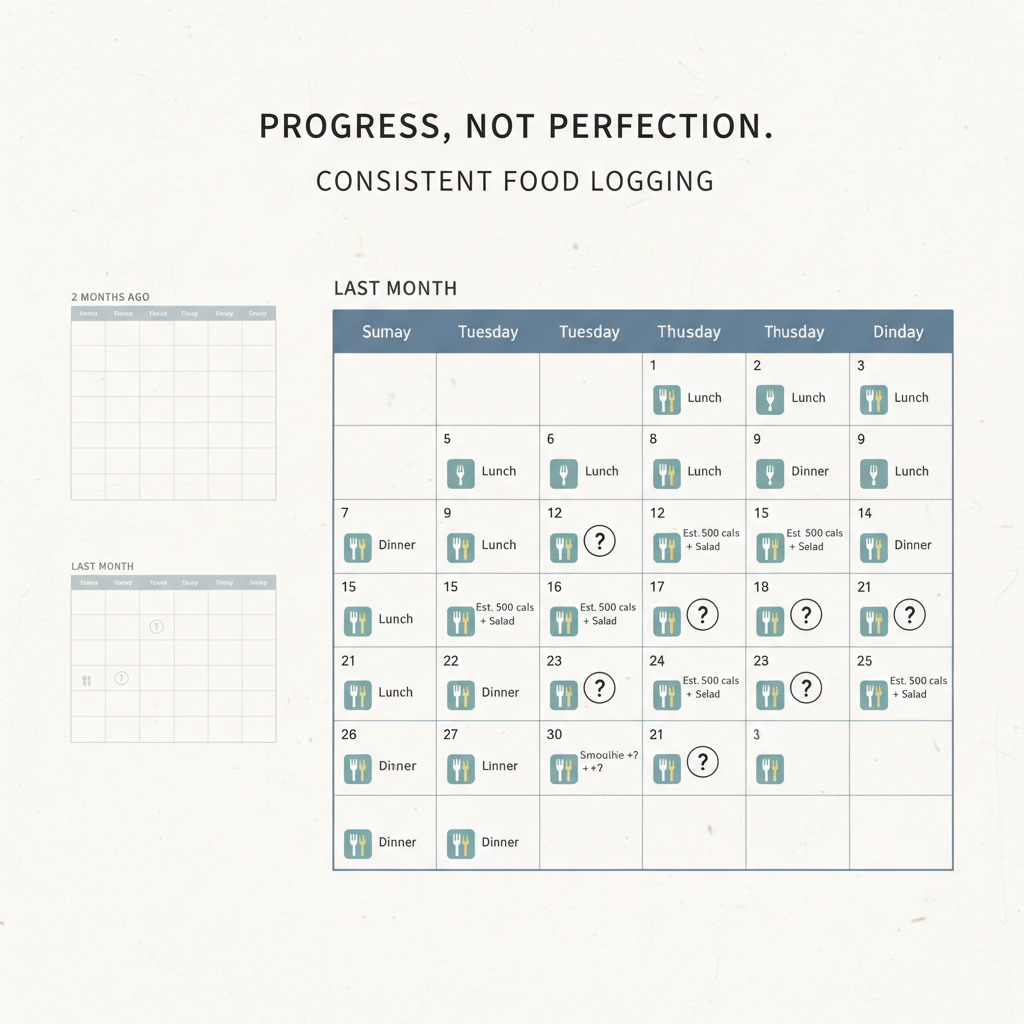
Three Weeks of 40% Accuracy Beat Six Months of Perfect Failure
I learned this lesson the hard way after watching my MyFitnessPal streak die at day four for the third time. I'd obsess over weighing every grape, then miss logging dinner because I went out spontaneously. Game over, motivation gone.
What actually worked was logging whatever I could remember, even if it was wildly wrong. Tuesday's lunch might be "sandwich, probably 500 calories" instead of precise bread-turkey-mayo calculations. I'd estimate restaurant meals as "big pasta dish, maybe 800?"
Those rough logs taught me more about my eating patterns than months of perfect-then-nothing tracking ever did. I spotted that I always overeat on Sundays, that afternoon snacking destroys my goals, and that my "healthy" smoothies were calorie bombs.
Imperfect data you actually collect beats perfect data you don't. Your 60% accurate log will show real patterns. Your abandoned perfect tracker shows nothing.
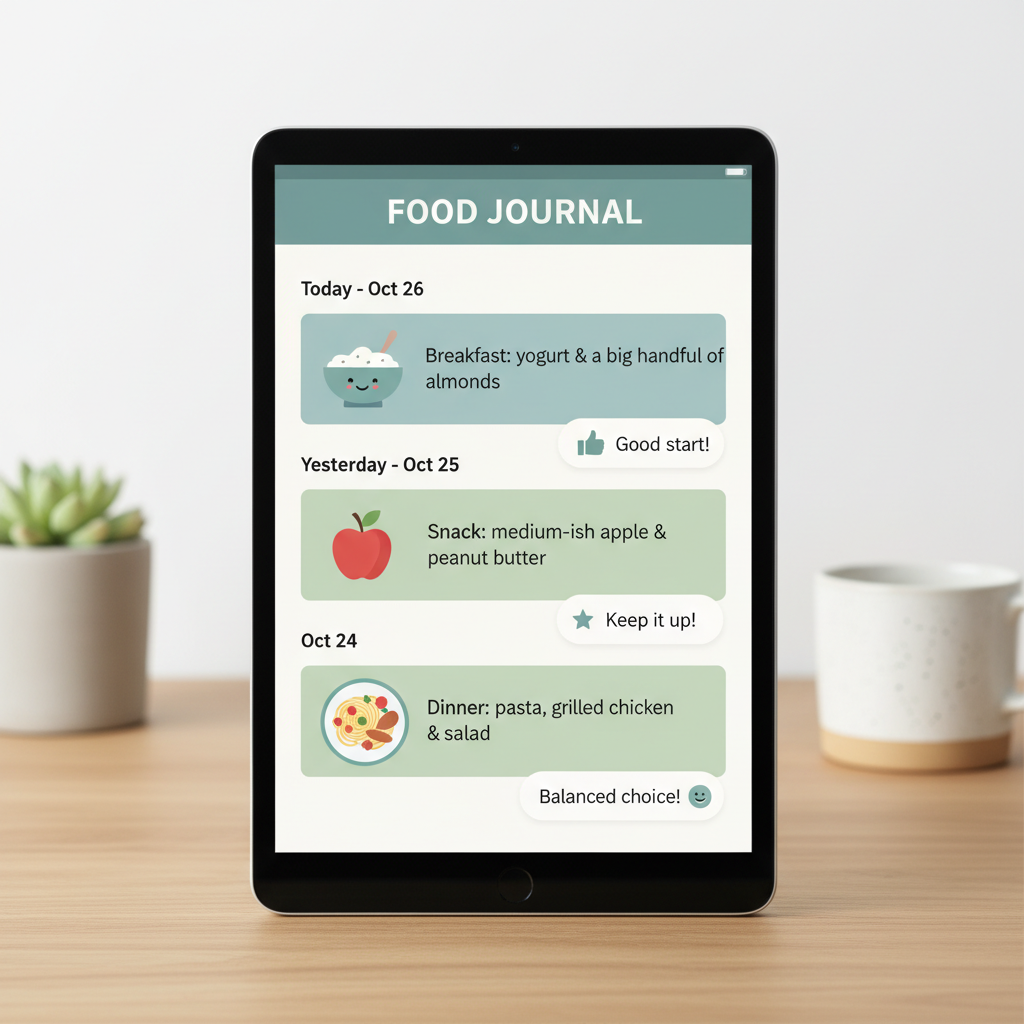
What Happens When Your App Doesn't Shame You for Guessing Portion Sizes
I've noticed something interesting happens when I stopped obsessing over whether that chicken breast was exactly 4.2 ounces or just "medium-sized." My tracking consistency shot up because I wasn't dreading the whole process.
Here's what actually works: Log your best guess immediately, then move on. That handful of nuts? Call it 1/4 cup. The pasta you eyeballed? Probably a cup and a half. I've found that being roughly right 90% of the time beats being precisely wrong because you gave up after three days.
The apps that celebrate "Good job logging!" instead of nitpicking your measurements keep you in the habit longer.
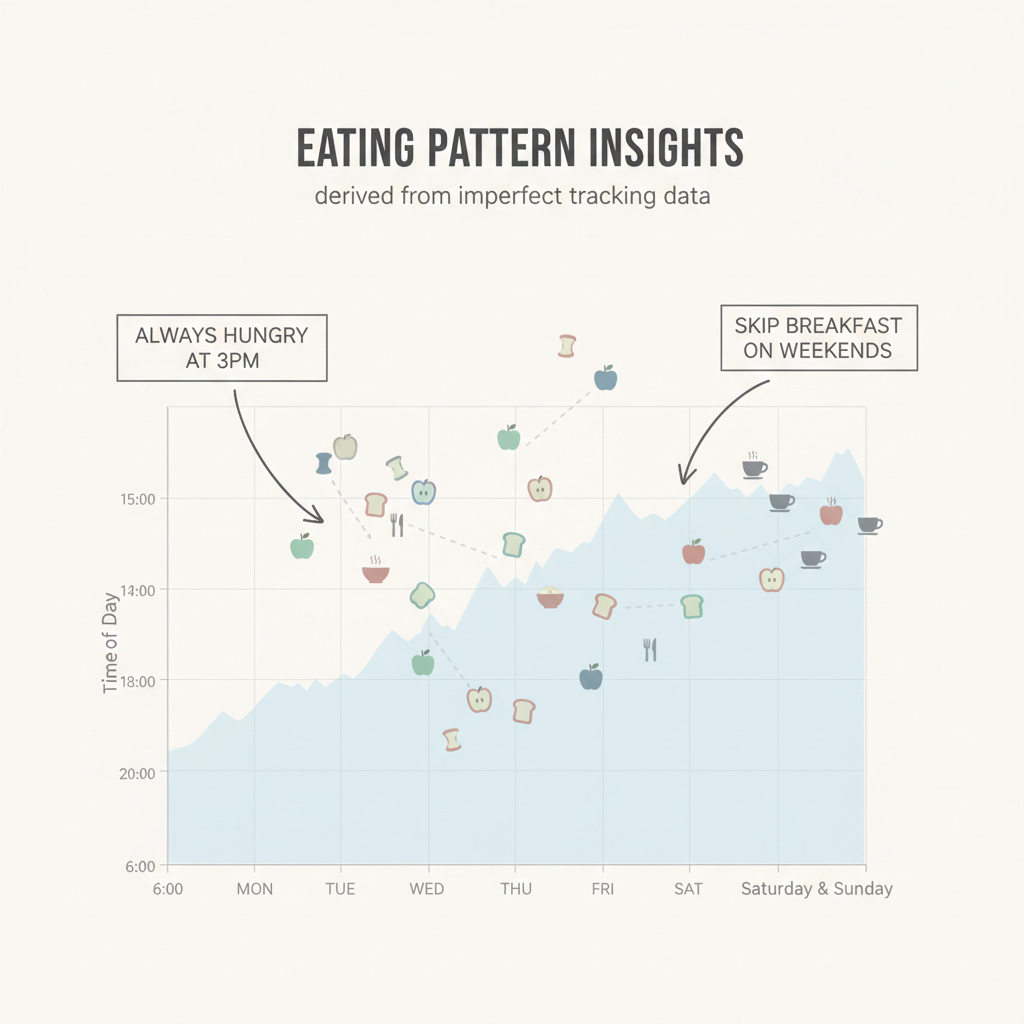
Learning My Actual Eating Patterns From Messy, Real-Life Data
The biggest revelation came from looking at my incomplete entries over three months. I'd logged maybe 60% of my meals, but patterns jumped out immediately.
Tuesday afternoons were consistently my highest-calorie danger zone - always that 3pm vending machine grab or coffee shop detour. I never would've spotted this tracking "perfectly" for just two weeks.
My weekend logging was terrible, but even my scattered entries showed I wasn't going as overboard as I thought. That "ruined" Saturday was actually just 200 calories over maintenance, not the disaster spiral I imagined.
The messy data told a truer story than any perfect week could. I learned I'm a stress snacker specifically between 2-4pm, that I undereat breakfast when rushing, and that my "cheat meals" rarely exceeded 800 calories anyway.
Imperfect tracking revealed actual patterns instead of idealized behavior.
Your Questions, Answered
How much time does imperfect calorie tracking actually save me each day?
From my experience, you're looking at maybe 2-3 minutes total instead of the 10-15 minutes I used to spend obsessing over every macro. I just log the main stuff and move on - no more hunting down the exact brand of olive oil or weighing lettuce leaves.
Does celebrating "good enough" tracking actually cost more than strict calorie counting apps?
Most of these apps are actually cheaper or free because they're not trying to be everything to everyone - I've seen them range from free to maybe $5/month max. The expensive ones are usually the hardcore fitness apps that want you tracking your sleep, steps, and probably your breathing pattern too.
How long before I stop feeling guilty about not logging every single thing I eat?
I'd say it took me about 2-3 weeks to get comfortable with the idea that logging 80% of my food was actually better than logging 100% for three days and then giving up completely. Once you see that you're still making progress without the perfectionist stress, the guilt fades pretty quickly.
Your Next Imperfect Step
Here's what I'd do: commit to logging just one meal tomorrow, however messily you want. Don't aim for perfect macros or precise measurements. Just show up and track something real.
Progress beats perfection every single time.