
Gentle Food Tracker for College Students Fighting Diet Culture
Snacko is the food tracking app that makes healthy eating effortless. Join thousands building better eating habits every day.

What most people don't realize is that college dining halls are basically diet culture boot camps. I've watched friends skip breakfast because they "already ate too much yesterday," or obsess over the calorie counts posted next to every single food option. The irony? We're supposed to be learning and growing, but instead we're learning to feel guilty about fueling our brains. That's why I started tracking my food differently – not to restrict, but to actually make sure I was eating enough to think clearly during finals week.

Tracking Energy, Not Calories: Why Your Body Needs Fuel During Finals Week
Q: Why should I track energy instead of calories during finals?
A: Because your brain is literally eating through glucose while you're cramming for organic chemistry. I learned this the hard way sophomore year when I tried to "eat clean" during finals and couldn't focus for more than twenty minutes. Your body needs consistent fuel, not restriction. I started tracking how different foods made me feel - like noting that oatmeal with peanut butter kept me steady for three hours, while just coffee left me shaky by 10am.
Q: What does tracking energy actually look like?
A: Simple check-ins throughout the day. I ask myself: Am I physically hungry? Do I feel mentally sharp or foggy? Am I getting headaches? Then I eat accordingly, not based on some arbitrary calorie limit.
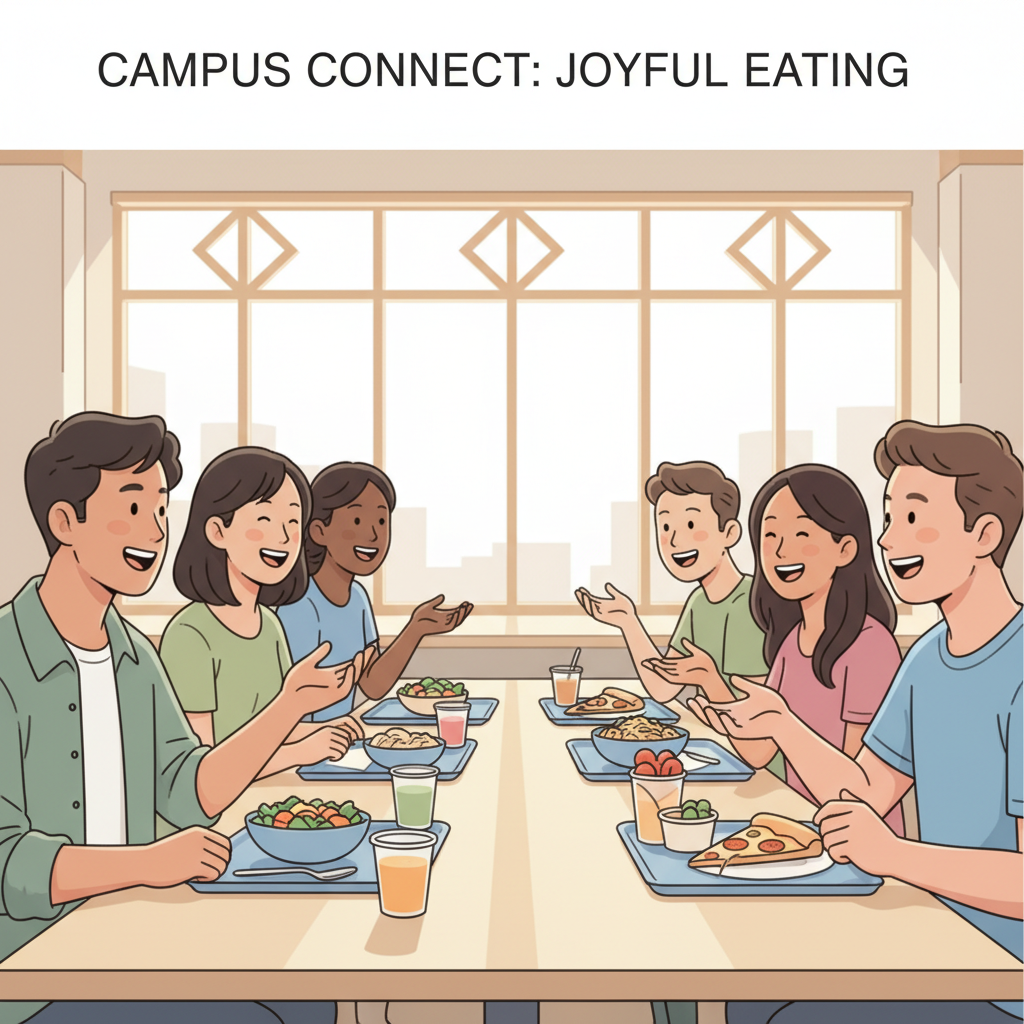
Navigating Dining Hall Anxiety Without the All-or-Nothing Spiral
I've learned that dining halls are basically designed to trigger every anxious food thought you've ever had. The all-you-can-eat setup, the pressure to "get your money's worth," watching other people's plates – it's overwhelming.
What actually helped me was setting one simple intention before walking in. Not "I'll eat perfectly," but something like "I'll honor my hunger" or "I'll try something new today." When I caught myself spiraling about whether the pasta was "worth it," I'd remind myself that no single meal defines my health.
I started sitting with friends who weren't obsessing over food choices. Turns out, most people just grab what looks good and move on. Revolutionary concept, right?
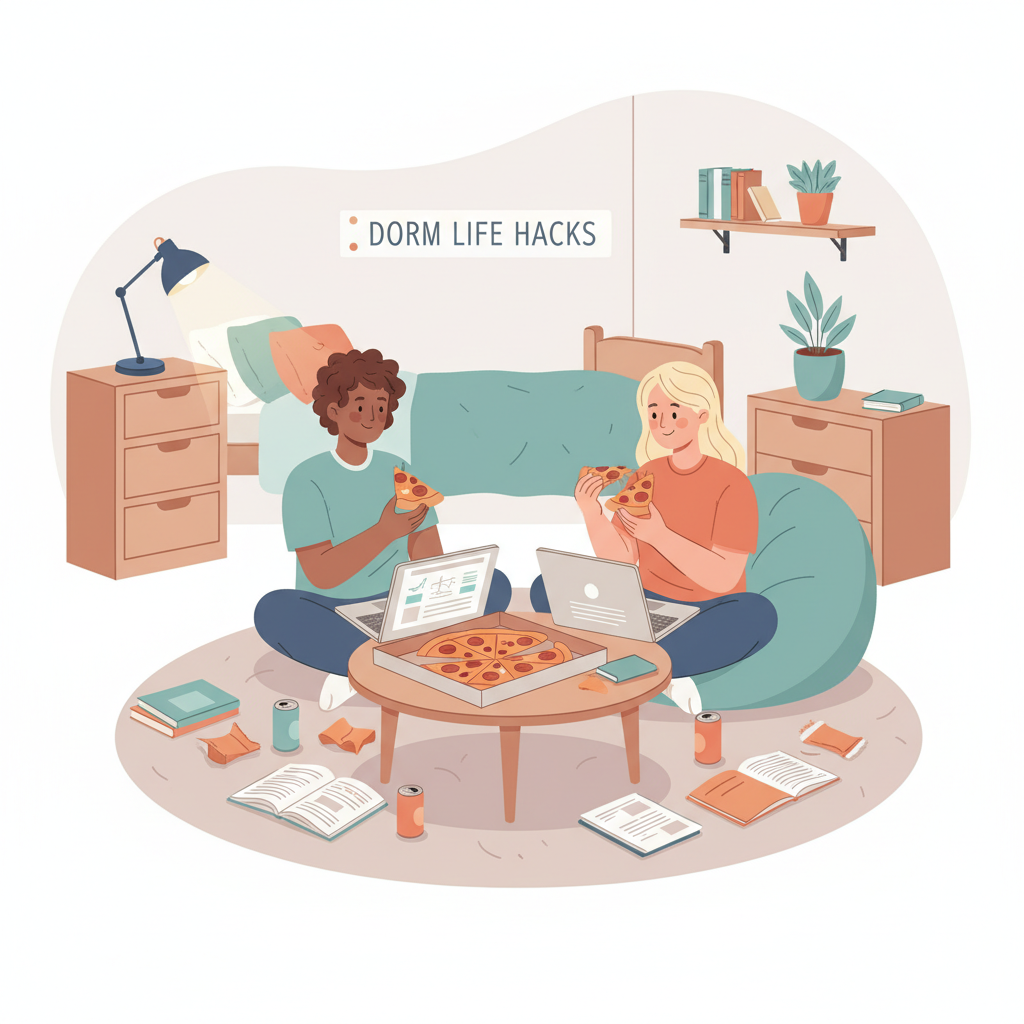
Building Food Flexibility When Your Roommate Orders Pizza at Midnight
I used to panic when my roommate Sarah would order Domino's at 11 PM while I was studying. The smell would hit me and I'd either completely restrict myself or eat way more than felt good, then spiral into guilt.
What shifted everything was realizing I could make a choice in the moment instead of following rigid rules. Now I ask myself: "Am I actually hungry? What sounds good to my body right now?" Sometimes that's a slice with some salad I throw together. Sometimes it's just finishing my tea and going to bed.
The mental model that works for me is treating late-night food situations like any other decision - not a moral test. Pizza at midnight isn't inherently good or bad. It's just food that exists at a specific time.
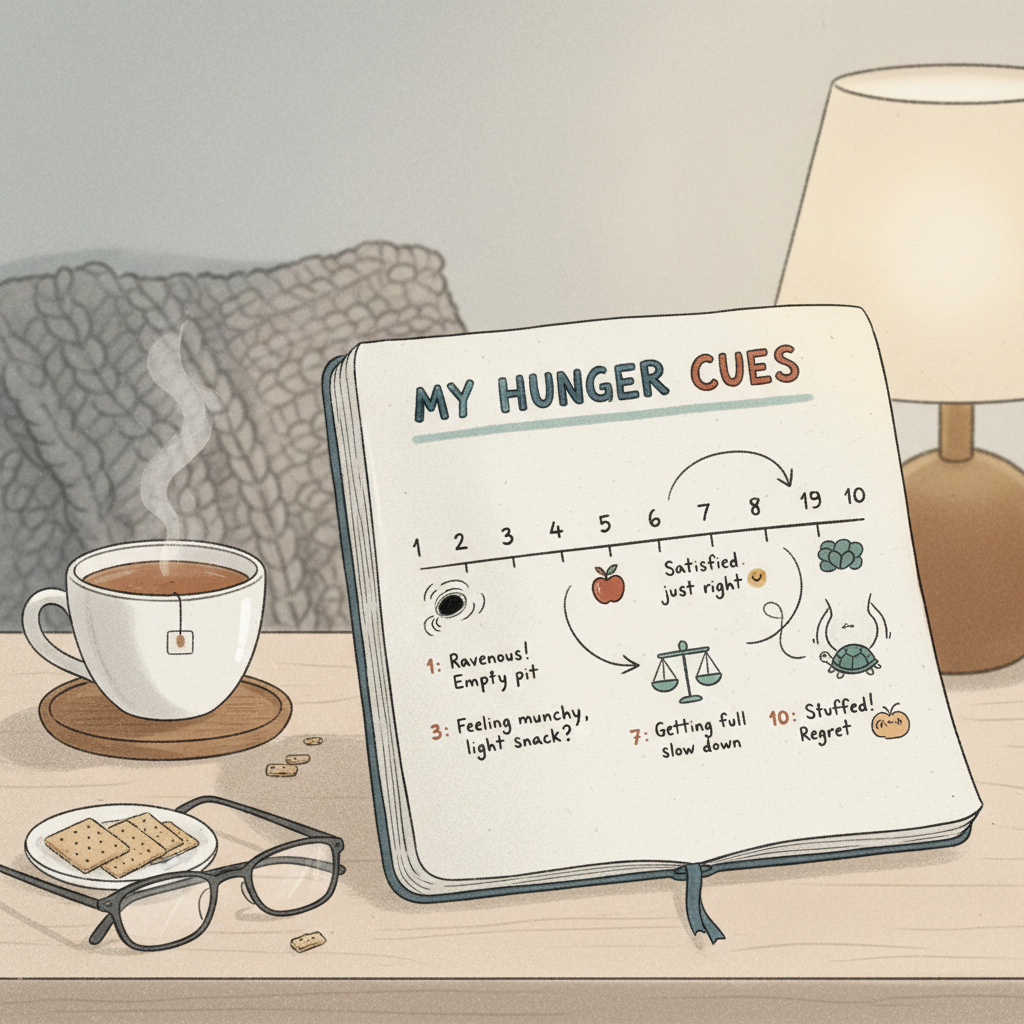
Creating Your Personal Hunger Scale for Exam Season Stress Eating
I had to throw out everything I thought I knew about hunger during finals week. That "eat every 3 hours" rule? Useless when you're cramming until 2am.
Here's what actually worked:
Before studying: Rate your hunger 1-10. Write it down.
1-3: You're running on empty. Eat something substantial or your brain will revolt in an hour.
4-6: Perfect study fuel zone. Light snack or ignore it.
7-10: Not actually hungry. This is stress, boredom, or procrastination talking.
The game-changer: I started asking "What does my body actually need right now?" instead of "Should I be eating?"
Sometimes the answer was protein. Sometimes it was water. Sometimes it was a 10-minute walk to reset my nervous system.
Your hunger scale will look different than mine. That's the point.
Your Questions, Answered
How much time does food tracking actually take when you're already swamped with classes?
Honestly, once you get the hang of it, I'm talking maybe 2-3 minutes per meal - just long enough to snap a photo and jot down how you felt. I found it way less time-consuming than obsessing over calories, and you can literally do it while walking to your next class.
Does gentle food tracking cost anything, or is this another expensive wellness trend I can't afford?
The basic approach costs absolutely nothing - you can use your phone's notes app or even a regular notebook from the dollar store. There are some paid apps out there, but from what I've seen, the free options work just as well for tracking hunger cues and energy levels without the diet culture BS.
How long before you actually notice changes in your relationship with food using this method?
I'd say give it at least 3-4 weeks before expecting any real shifts in how you think about eating. The first week feels weird because you're breaking old habits, but by week three I started noticing patterns in my energy and mood that actually helped me eat more intuitively.
What I'd Actually Do Tomorrow
Here's what I'd do: download one of these apps tonight and just track how foods make you feel for three days. Not calories, not guilt trips—just "had energy after breakfast" or "felt sluggish after lunch." That data about your own body is way more valuable than any diet rule ever will be.


